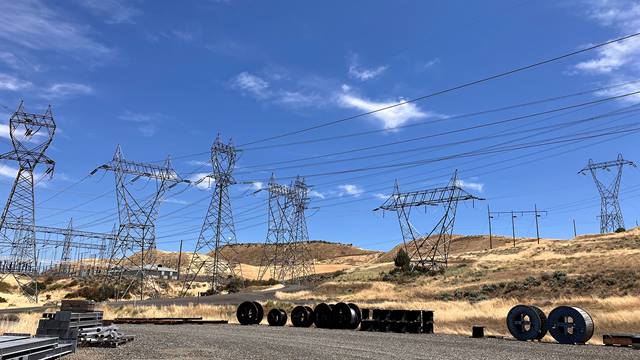
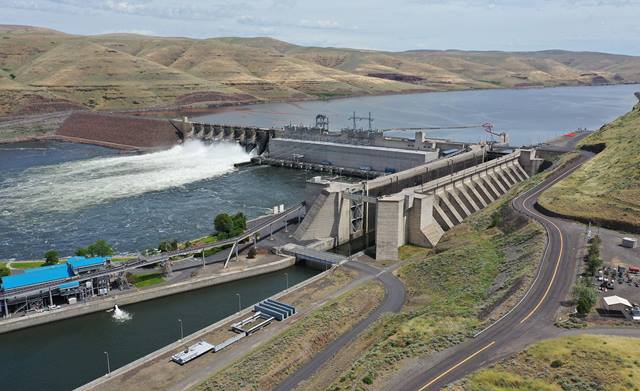
The 2026 WMP showcases a proactive and comprehensive strategy that enhances BPA’s resilience to wildfires.
wave

The newest iteration of the WMP is a demonstration of how our workforce dedicates itself to continuously improving the resilience and reliability of the Federal Columbia Transmission System.

Deputy Administrator and Chief Operating Officer Suzanne Cooper

As the Pacific Northwest prepares for another wildfire season, BPA continues to enhance and modernize its Wildfire Mitigation Plan – aligning the agency’s wildfire mitigation efforts under a single plan.

The 2026 WMP is the fifth iteration since 2020. Completely rewritten, this edition highlights BPA’s improvement to risk modeling, changes to operational practices and increased focus on collaboration with industry peers.

While BPA’s Transmission Infrastructure Resiliency workgroup manages the WMP, the update required a cross-agency effort. BPA supervisory civil engineer Kelly Miller highlights that the WMP is a living document.

“Input for the plan comes from many individuals and teams across BPA,” Miller said. “Regular updates ensure that BPA is prepared to face the region’s ever-evolving wildfire hazards and risks.”

One addition to the 2026 WMP is the inclusion of a new governance structure. Established in 2025, the structure is comprised of cross-functional steering and sponsor advisory groups comprised of members ranging from Geomatics to Real-Time Operations, the governance structure fosters agencywide coordination.

The WMP is structured around a mitigation hierarchy established under BPA’s Wildfire Mitigation Program and composed of four main elements: system maintenance and hardening, system operations, situational awareness and public safety power shutoff.

Year-round, in preparation for the annual wildfire season, BPA personnel work to ensure the reliability of the Federal Columbia River Transmission System. BPA prioritizes improving the system’s resiliency, such as through transmission line design hardening that minimizes component failure impacts and through rigorous asset and vegetation inspections, performs best-in-class vegetation management, and maintains industry standards for equipment and construction specifications.

As wildfire season approaches, BPA relies on situational awareness tools and models to inform public safety power shutoff operations and hardening efforts. PSPS is a set of procedures BPA may activate during extreme wildfire conditions to proactively de-energize any transmission assets that are at risk. BPA may also proactively deenergize a transmission line to ensure safety for wildfire firefighting efforts nearby. Short- and medium-range weather forecasts provided by BPA meteorologists often crucially inform PSPS decision-making. Throughout the PSPS process, BPA coordinates with and informs utility customers directly.

The agency’s Situational Awareness Viewer, a geospatial incident map, is another important tool BPA utilizes. The SA Viewer provides a common operating picture showing real-time wildfire data across the agency’s service territory.

“The newest iteration of the WMP is a demonstration of how our workforce dedicates itself to continuously improving the resilience and reliability of the Federal Columbia Transmission System,” Deputy Administrator and Chief Operating Officer Suzanne Cooper said. “I want to acknowledge and thank the Wildfire Mitigation Plan team for their steadfast efforts to enhance this plan.”

In addition, BPA promotes wildfire training throughout the year to improve staff knowledge on wildfire stages, vehicle readiness, situational awareness and more. BPA also performs annual PSPS and storm and wildfire incident response plan tabletop exercises that simulate a potential PSPS or wildfire scenario in a low- stress environment. Moreover, BPA coordinates with regional, national and international partners to participate in wildfire mitigation and planning efforts.

To learn more about BPA’s Wildfire Mitigation Program, visit the Wildfire Mitigation webpage on bpa.gov.

Related News